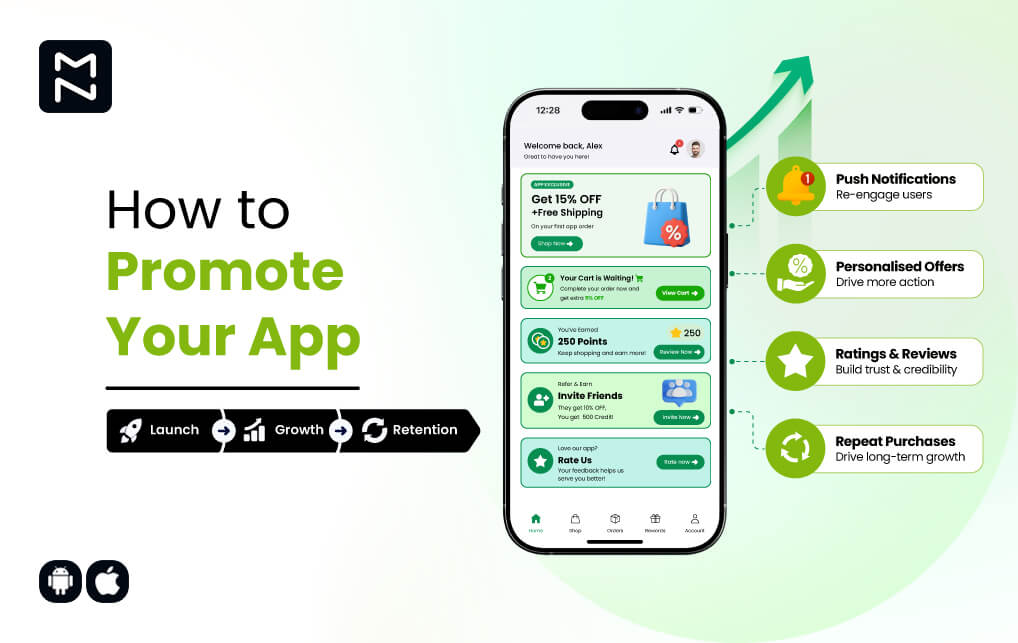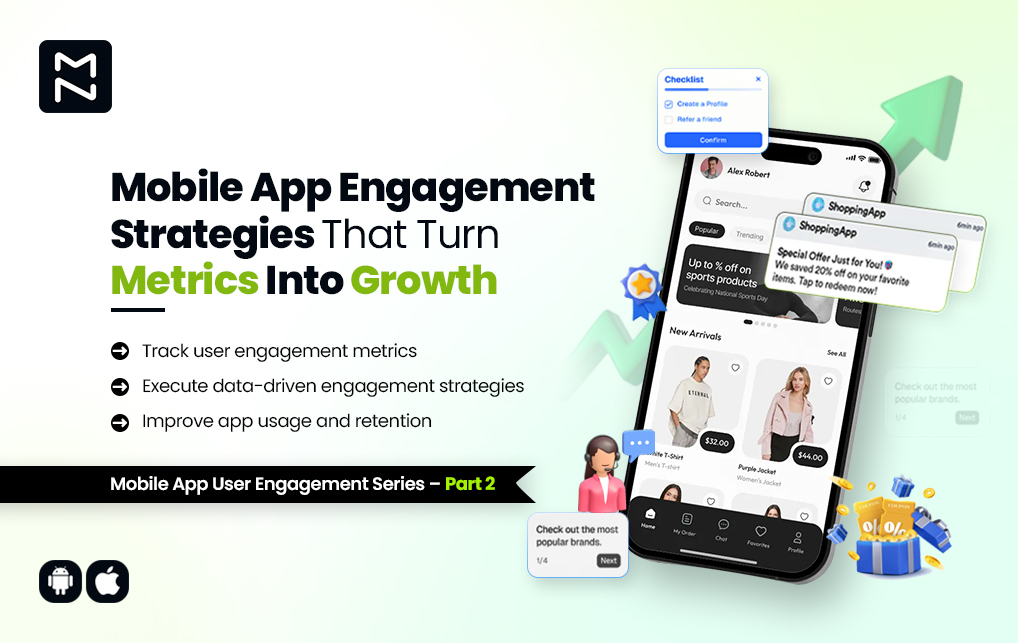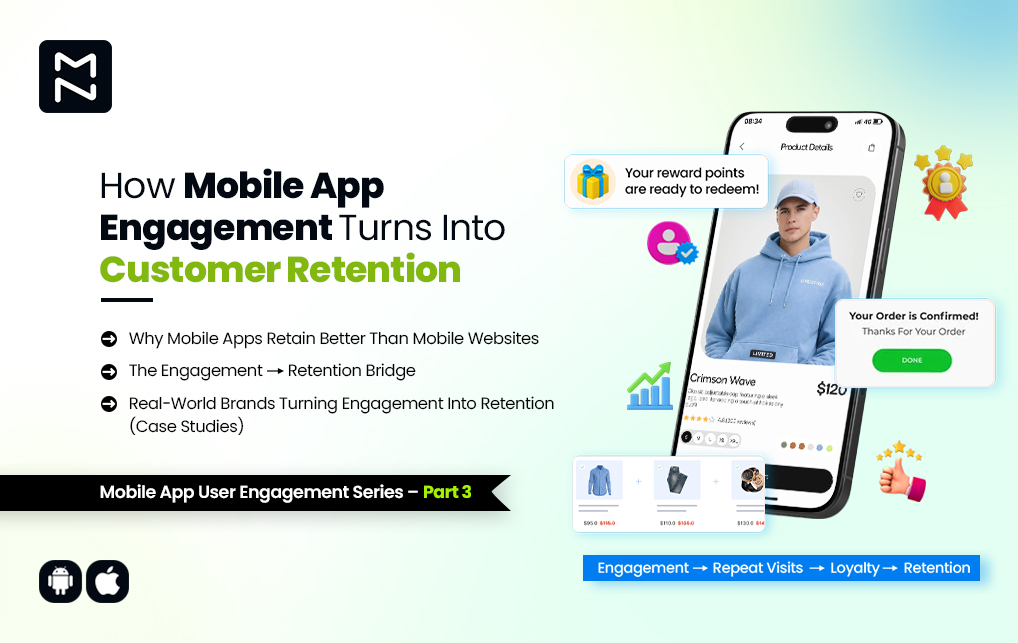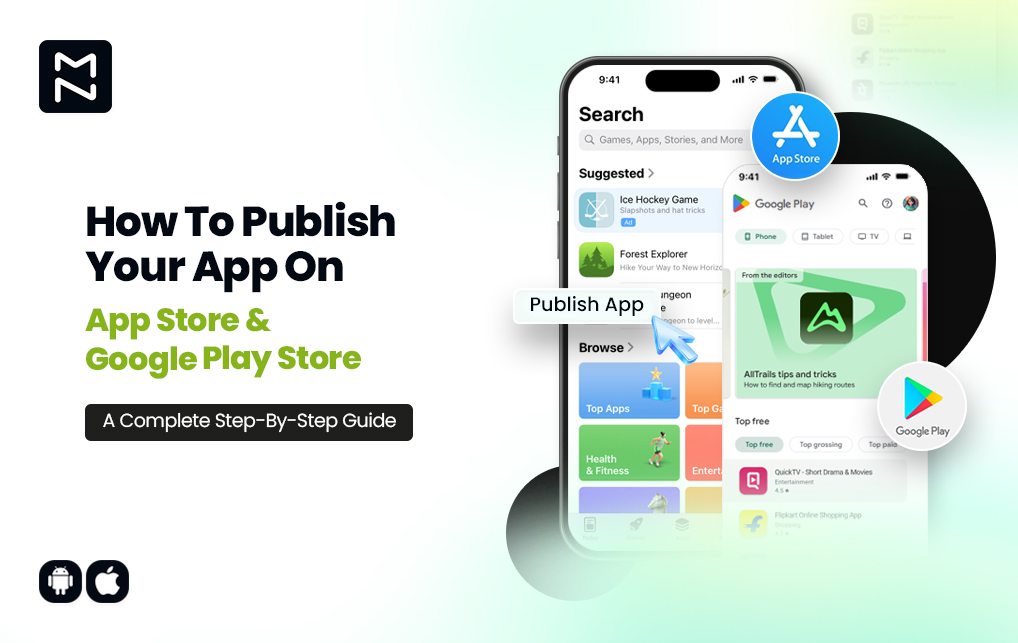
Let’s dive into why mobile app promotion is a must for maximizing app visibility and the strategies that will keep your app ahead of the curve.

Launching an app is only the first step. The real challenge begins when you ask how to promote a mobile app in a market where millions of apps compete for attention every single day.

Without a strong mobile app promotion strategy, even the most innovative app can struggle to get downloads, retain users, and generate long-term growth. Customers today have more choices, shorter attention spans, and higher expectations. If your app fails to stand out, they move to the next option fast.

This is why knowing how to promote your mobile app is no longer optional. It is a critical part of building visibility, driving installs, and turning first-time users into loyal customers.

From pre launch planning and App Store Optimization (ASO) to social media campaigns, influencer marketing, referral programs, and retention strategies, every stage of promotion plays a direct role in your app’s success.

In this guide, we will break down the best mobile app promotion strategies to help you increase downloads, improve engagement, and build sustainable growth before launch, during launch, and long after your app goes live.

What is Mobile App Promotion

Mobile app promotion is the process of attracting the right users to your app, increasing installs, and keeping those users engaged long after the first download. If you are wondering how to promote a mobile app, the answer goes far beyond launching it on the App Store or running a few ads. True mobile app promotion focuses on the full customer journey from discovery and downloads to retention and repeat purchases.

Many Shopify brands invest heavily in launch campaigns, paid ads, and first week installs, but growth often slows after that. In our experience, the biggest problem is not getting the first download. It is giving customers a reason to come back for the second and third purchase.

That is where most mobile app promotion strategies fail. Downloads create visibility, but retention will generate revenue.

To promote a mobile app successfully, businesses need a strategy that starts before launch, builds momentum during launch, and continues long after launch day. This includes App Store Optimization (ASO), social media campaigns, influencer partnerships, referral programs, push notifications, loyalty programs, and conversion-focused website journeys.

The best way to promote a mobile app is not always spending more on acquisition. Often, improving repeat purchases and customer retention delivers faster ROI than constantly chasing new installs.

Studies consistently show that retaining an existing customer costs far less than acquiring a new one. That makes post-launch engagement one of the highest-impact growth levers for ecommerce brands.

The goal is not just more downloads. The goal is profitable user behavior.

That means bringing users back, increasing repeat purchases, improving customer lifetime value, and turning your app into a sustainable revenue channel instead of just another digital touchpoint. For ecommerce brands, especially on Shopify, mobile app promotion is not just a marketing task. It is a long-term growth strategy. Because when customers install your app, you gain something far more valuable than a one time sale. You gain a direct channel for retention, re-engagement, and customer loyalty.

Why Mobile App Promotion Matters in 2026

Building a mobile app is no longer the competitive advantage. Getting customers to use it, return to it, and buy through it is where real growth happens. Many brands invest heavily in app development, launch with strong expectations, and drive an initial spike in installs. But installs alone do not create revenue. Retention does.

In 2026, mobile app promotion strategies are not just about visibility or downloads. They are about creating repeat purchases, improving customer retention, and building long-term revenue. Many businesses still treat app promotion like a one-time launch campaign. They run ads, push for downloads, and stop there. That approach is expensive because paying to acquire users who never return quickly destroys profitability.

The best mobile app promotion strategies focus on what happens after the install. Push notifications, loyalty programs, referral loops, personalized offers, and re-engagement campaigns help turn first-time users into repeat customers. The goal is not just to increase installs but to create stronger customer behavior that improves lifetime value.

For Shopify brands, this matters even more. Acquiring new customers is becoming more expensive. After all, customers switch faster between options and drop off earlier in the buying journey, while margins keep shrinking.

A mobile app allows brands reach customers directly, without relying on ads or algorithms.

A mobile app enables businesses to re-engage customers without relying on algorithms or constant ad spend, by offering personalized experiences and a smooth buying journey.

That is why mobile app promotion is not just a marketing tactic. It is a retention strategy. The brands that win in 2026 will not be the ones spending the most on acquisition. They will be the ones building systems that bring customers back again and again. Because downloads create visibility, but retention creates revenue.

Pre Mobile App Launch Strategies (Laying the Foundation)

A well-planned pre-launch strategy helps generate buzz, build an audience, and position your app for success from day one. Here’s how to do it right.

1. Understanding Your Audience Before You Build Your Promotion Strategy

Before promoting your mobile app, you need to know exactly who you want to attract and why they would choose your app over staying on your website.

  • Conduct Market Research: Use platforms like Google Trends, App Annie, and Sensor Tower to analyze demand, competition, and emerging trends.
    Imagine you’re launching a fitness app aimed at young professionals. By using Google Trends, you notice an increasing demand for “home workout” apps, especially with a focus on quick, effective routines.
  • Identify Your Target Audience: Define buyer personas—who they are, what challenges they face, and how your app solves their problems.
    You analyze a popular fitness app in your niche and discover that users often complain about its lack of personalized workout plans. This feedback presents an opportunity for your app to include customized routines based on user preferences, fitness levels, and goals, giving you a competitive edge.
  • Analyze Competitor Apps: Study similar apps in your niche, their features, pricing models, and user feedback to identify gaps your app can fill. You analyze a popular fitness app in your niche and discover that users often complain about its lack of personalized workout plans.
    This feedback presents an opportunity for your app to include customized routines based on user preferences, fitness levels, and goals, giving you a competitive edge.

Best Tips to Understand Customer Buying Behavior, Pain Points, and Expectations

Most brands ask: Who is my customer? Better brands ask: Why would they download my app instead of staying on mobile web?
Try Mobile App for Business: 30 days free trial

  1. Study Repeat Buyers FirstYour best customers already show what works.Look at repeat buyers, high-AOV customers, and loyal shoppers. See what they buy, how often they return, and what makes them stay.These users help you understand what drives long-term value, not just first-time purchases.
  2. Track Where Customers Drop OffFind where people leave before buying.Check product pages, cart abandonment, checkout exits, and bounce-heavy pages. These friction points show what is slowing the buying journey.If customers leave too early, your app should solve that.
  3. Read Reviews and Support QueriesCustomer complaints are free research.Look at reviews, chat support, FAQs, and return reasons. Repeated questions often reveal trust gaps, confusion, or missing features.What customers complain about most should shape your messaging.
  4. Analyze Competitor ReviewsYour competitors’ negative reviews are your opportunity.See what users dislike in similar apps or stores. It can be slow checkout, poor personalization, weak loyalty rewards, bad UX.These gaps help position your app better.
  5. Ask Directly Through Surveys

    Simple questions give strong insights.

    Ask customers:

    • Why did you buy?
    • What almost stopped you?
    • What would make you shop again?
    • Would exclusive app-only benefits make you download an app?

    This gives messaging clarity fast.

  6. Watch Channel BehaviorWhere customers engage tells you where to promote.Check whether they respond more to email, Instagram, WhatsApp, SMS, or push notifications.Promotion works better when you meet users where attention already exists.
  7. Focus on Motivation, Not DemographicsAge and location matter less than buying triggers.Understand whether customers buy for convenience, urgency, discounts, exclusivity, or trust.People install apps for outcomes, not demographics.
how to promote mobile app pre launch

2. Build Early Demand Before Launch Day

Waiting until launch day to start marketing is one of the biggest mistakes brands make.

Your goal before launch is simple: create anticipation.

When customers already know what your app offers, launch day becomes a conversion event instead of an awareness campaign.

Create a High Converting Landing Page

A dedicated landing page is one of the most effective mobile app promotion strategies before launch.It gives potential users a clear reason to care about your app and creates a place to capture email or SMS signups for early access.

Your landing page should highlight:

  • app-only offers and discounts
  • faster checkout and better shopping experience
  • loyalty rewards and exclusive access
  • countdown timer for launch day
  • strong call to action for signups

This helps turn interest into a ready to convert audience instead of relying only on launch-day traffic.

Leverage Social Media Teasers & Countdown Campaigns

Share behind the scenes content, app sneak peeks, and countdown timers to build anticipation. A personalized fashion app might use Instagram and TikTok to share sneak peeks of features like virtual try-ons or a personalized style quiz.
Through short video snippets and a countdown to launch day, the brand engages potential customers by showing them how the app will enhance their shopping experience.They could also create a hashtag like #GetStyledWith[AppName] to encourage users to share their excitement and anticipation, creating buzz around the app.

Collaborate with Micro-Influencers

Partnering with niche influencers can help reach a targeted audience that is more likely to engage and convert. Fashion mobile apps that curates new trends and personalizes recommendations could collaborate with fashion micro-influencers who have a niche following of trendsetters.
Influencers might share posts or stories wearing outfits that can be found in the app or showing their customized style recommendations based on the app’s features. This gives their audience a glimpse into how the app works and builds anticipation.

Create a Demo Video

A short, engaging explainer video showcasing the app’s features and benefits can drive interest and boost early adoption. For a fashion styling app a demo video can show how users scan their closet get outfit suggestions from their own wardrobe and easily share their favorite looks on social media. The video could be shared on YouTube, Instagram, and Facebook, with engaging captions like Find your perfect look with just a few taps.

3. App Store Optimization (ASO): Optimise Your Title, Keywords & Visuals

If you are wondering how to promote a mobile app effectively, App Store Optimization should be one of your first priorities. ASO helps your app rank higher in App Store and Google Play search results, making it easier for potential users to discover and download your app. Just like SEO improves website visibility, ASO improves app visibility where installs actually happen.

Strong mobile app promotion is not only about driving traffic. It is also about making sure your app converts when people find it.

Here is how to build a strong ASO foundation for better visibility, higher installs, and long-term growth.

1. Use Relevant Keywords in Title & Description

Your app title and description are major ranking factors in both the App Store and Google Play. Use relevant keywords naturally in your title, subtitle, and short description so your app matches how users search.

  • Your title and description form the base of your app’s visibility in the store. If it’s your fashion store then add your primary keyword such as “fitness tracker” or “fashion shopping app” naturally in the title, subtitle and short description so it aligns with how users search and imptoves discoverability.
  • Focus on clarity, not keyword stuffing. Combining primary keywords with intent-based phrases like “best,” “free,” or “for beginners” helps attract higher-intent users and improves search relevance.
  • Use ASO tools like AppTweak, Sensor Tower or MobileAction to find keywords that have high search volume and low competition. Focus on terms that reflect strong user intent, such as feature based searches like “grocery delivery app” or problem-solving searches like “home workout planner,” rather than broad generic keywords.
    Regularly update your keyword strategy by tracking search trends, competitor rankings, and new customer behavior patterns to keep your app visible and competitive in app store search results.

2. Choose the Right Category

Selecting the right category impacts your discoverability.

  • Your app category shapes how both users and store algorithms discover your listing. Select a category that matches your core function and audience intent. Use category level insights in the App Store or Google Play Console to compare competition density and ranking difficulty. Avoid generic spaces such as Lifestyle if your product aligns with specific verticals like Health and Fitness.
    For example a meditation app can perform better in Health and Fitness where users have higher engagement and retention than in Lifestyle.
  • Study top competitors in your segment to identify where engagement and install velocity are highest. Reassess your category choice after every major feature update to stay relevant and visible.

3. Optimize App Visuals (Icon, Screenshots & Preview Video)

Your visuals drive click to install conversions.

  • Use high quality screenshots that show key features and value moments within your app listing.
  • Add screenshots with short captions that highlight your app’s core benefits and guide user intent
  • Add a short preview video that quickly shows how your app works and what makes it worth downloading.
Consider a 15–30 second preview video demonstrating the app in action to increase installs.

4. Encourage Ratings & Reviews

Ratings and reviews are powerful trust signals for both users and app store algorithms.

  • Ask users for feedback at the right moment such as after a purchase or when they complete a key action. This timing helps capture genuine satisfaction and boosts your average rating.
  • Responding to reviews also shows active support and improves customer trust. Reviews help future users decide faster and strengthen your app’s credibility.
  • Use your app analytics to see what users say in their reviews. It helps you understand what they like, what needs improvement, and how their feedback affects your downloads and uninstalls.

The Pro Tip: Avoid asking for reviews too early, especially before users experience real value from your app. Trigger review requests only after a positive interaction, and give users an easy way to report issues through in-app support first. Solving problems before they reach the review section helps reduce negative ratings and protects your app’s reputation.

5. Localize for Better Global Reach

Localization goes beyond translation. It helps your app match how customers search, shop, and make decisions in different markets. Both Google Play and Apple App Store recommend adapting app listings for local languages and regional behavior because relevance directly affects discoverability and install conversion.

  • Adjust your keywords, app descriptions, screenshots, and preview content based on local language and buying behavior. Use culturally relevant visuals and messaging that feel familiar to users instead of simply copying your default listing.
    For example, an ecommerce brand expanding into the Middle East may see stronger install intent by using Arabic app store descriptions, region-specific visuals, and messaging around local payment preferences such as Cash on Delivery. These small adjustments improve trust and reduce hesitation during the install decision.
  • Track performance through your analytics dashboard to identify which localized versions drive higher engagement, stronger retention, and better conversion rates. Keep updating your localized metadata as customer behavior and search trends evolve.
  • Localization improves discoverability, builds trust, and increases installs. Hence, making it one of the most effective mobile app promotion strategies for global growth.

6. Improve Engagement and Retention After Downloads

Many brands assume mobile app promotion ends once the app is installed. In reality, long-term growth starts after the download.

Both Google Play and Apple App Store prioritize apps that show strong engagement, steady usage, and positive user experience because these signals indicate that the app delivers real value. Higher retention often leads to better visibility, stronger rankings, and more organic installs over time.

  • Use personalized push notifications to bring back inactive users and increase repeat sessions. For ecommerce brands, reminders about abandoned carts, restocked products, loyalty rewards, and limited-time offers can drive stronger re-engagement than generic promotional messages.
  • Regular feature updates also improve retention by keeping the app relevant and signaling active development to app store algorithms. Users are more likely to stay engaged when they see continuous improvements and new value being added.
  • Monitor retention metrics such as uninstall rates, session frequency, repeat purchases, and customer lifetime value to identify where users drop off. Use in-app messages, onboarding flows, and loyalty programs to reduce friction and encourage repeat visits.
    For example,a fashion brand using personalized push notifications for wishlist reminders and exclusive app-only offers can improve repeat purchases while reducing dependence on paid acquisition channels.
  • Encourage users to explore new features through in-app messages and limited-time offers.

By focusing on these pre-launch strategies, you can ensure that your app gains momentum before it even hits the market, giving it the best possible chance for success.

During Mobile App Launch Strategies (Get Your Customers Notice Your App)

Launch day is where visibility turns into installs, but installs alone do not guarantee growth. Many brands spend months building an app and invest heavily in launch campaigns, only to see low adoption because customers do not understand the value of downloading the app.

Strong mobile app promotion during launch is not just about awarenessit is about creating trust, reducing hesitation, and giving customers a clear reason to install.

According to Google Play best practices, successful app promotion depends on strong discoverability, clear value communication, and ongoing user engagement. The same applies to ecommerce brands launching a shopping app.

If you are asking how to promote a mobile app during launch, the focus should be visibility first, but retention immediately after. A retention system that turns first-time users into repeat customers. This works best when supported by strong pre launch demand, effective App Store Optimization, and post-install retention strategies that keep users engaged beyond day one.

Use Social Media to Drive Awareness and Early Installs

Social media is one of the most effective mobile app promotion strategies because it helps you reach customers where buying decisions already happen. Promote your app across Instagram, Facebook, TikTok, and YouTube by showing how the app improves the customer journey, not just by announcing the app launch.

Highlight benefits like faster checkout, app-only discounts, loyalty rewards, personalized recommendations, and early access to new collections. These benefits answer the most important customer question: why should I download this app instead of continuing on mobile web?

For many ecommerce brands, short-form videos showing app-exclusive offers and real shopping convenience often perform better than generic promotional posts because customers respond faster to clear value.

For example, an electronics brand can post short videos showing app-exclusive discounts on new smartphone launches, faster order tracking, and limited-time offers for first-time app users.

This shifts the message from feature promotion to value driven conversion.

Run Paid Campaigns for High-Intent Users

Paid campaigns are one of the best ways to promote a mobile app quickly, but broad targeting often leads to expensive installs with low retention.

A stronger app install strategy focuses on existing customers, repeat buyers, cart abandoners, and high-value shoppers who already trust your brand. These users convert faster and are more likely to stay active after installation. Google App Campaigns, Meta Ads, and retargeting campaigns work best when the message focuses on retention value such as app-only rewards, loyalty benefits, and faster reordering.

For example, a beauty brand promoting exclusive app discounts for repeat customers often sees stronger install quality than campaigns focused only on broad awareness. The goal is not more downloads. It is better downloads.

Create Shareable Content That Builds Organic Reach

Organic visibility improves trust before users even reach the app store. Create short videos, launch countdowns, product comparisons, polls, and customer reaction content that encourages users to engage and share.

For example, a fashion brand can run Instagram Story polls asking users to vote on their favorite new arrivals while offering early access to app users. This creates anticipation and helps increase app installs without relying only on paid campaigns. User generated engagement often creates stronger install intent because people trust social proof more than direct promotion.

Use Live Sessions and Creator-Led Content to Build Trust

Customers trust people more than advertisements. Use Instagram Live, TikTok videos, and creator-led product demos to show how your app works in real shopping situations. Demonstrate how customers can browse faster, access exclusive offers, or reorder products more easily through the app.

For many ecommerce brands, micro-influencers often drive stronger engagement than large creators because their audiences trust product recommendations more and interaction rates are higher. Creator led demonstrations reduce hesitation, improve trust, and support stronger first-week adoption.

Re-Engage with In-App Messages and Limited-Time Offers

Mobile app promotion does not end after the first install. Both Google Play and Apple App Store emphasize that strong engagement and retention signals improve long-term app visibility because they reflect real user satisfaction.

Use personalized push notifications and in-app messages to bring customers back with relevant reminders and limited time offers. For example, a fashion brand can promote a newly launched summer collection with an App Exclusive 15% Off valid for the next 24 hours. Customers who previously viewed similar products or added items to their wishlist are far more likely to return and complete the purchase.

This improves repeat purchases, strengthens customer retention strategy, and reduces dependence on paid acquisition channels.

how to promote mobile app during launch

Why Most Mobile App Launch Campaigns Fail

Most brands assume mobile app promotion is about getting as many downloads as possible on launch day. That is where most launch campaigns fail. Downloads without retention do not create growth—they create temporary traffic. Before installing, customers ask one simple question: why should I download this app instead of staying on mobile web? If the answer is unclear, installs stay low, engagement drops, and uninstall rates rise quickly.

The best mobile app launch strategies focus on value first. Faster checkout, app-only discounts, loyalty rewards, personalized offers, and easier repeat purchases give customers a real reason to install and return. Another common mistake is spending heavily on cold traffic while ignoring existing customers, repeat buyers, and cart abandoners who are far more likely to convert and stay active after installation.

Strong mobile app promotion does not stop at downloads. Without push notifications, onboarding flows, loyalty programs, and re-engagement strategies, most users never return after the first session. Both Google Play and Apple App Store prioritize strong engagement because it signals real user satisfaction and improves long-term visibility.

The best way to promote a mobile app is not to chase installs. It is to turn first-time downloads into repeat customers. Downloads create reach, but retention creates revenue.

Lets Understand How Adidas Turned Messaging Platform (WhatsApp) into a Powerful Promotional Tool

Adidas understood the power of social media and strategically used WhatsApp Business to build hype during their app launch. Lets dive into how they turned a messaging platform into a powerful promotional tool.

  • Creating a Personalized Experience

    Adidas took interactivity to the next level with their “Rent-a-Pred” campaign. Users simply messaged Adidas on WhatsApp for a chance to have a pro player show up to their game. This direct, personalized interaction made users feel like they were part of an exclusive club, building a deeper connection with the brand.

  • Infusing Humor and Aspirations

    The campaign cleverly blended humor and product promotion, suggesting Adidas shoes gave players an “unfair advantage” on the field. This lighthearted approach not only entertained users but also sparked conversations, all while subtly reinforcing the product’s performance benefits.

adidad leveraged WhatsApp for mobile app marketing

Image credit: medium.com

  • Humanizing the Brand

    By using a popular messaging platform like WhatsApp, Adidas made their brand feel approachable and authentic. It wasn’t just about selling shoes—it was about creating a genuine connection with customers, making the brand feel accessible and in tune with its audience’s needs.

  • Showcasing Products in Action

    What better way to demonstrate the power of your product than by showcasing it in action? The campaign allowed Adidas to feature their products live on the field, with amateur players stepping into the spotlight alongside professionals. This real-world experience helped users visualize the impact of Adidas products, giving them a reason to download the app.
    Adidas’ innovative use of WhatsApp for app promotion not only created buzz but also set a new standard for interactive, personalized marketing. By thinking outside the box and making their brand feel more human.

Adidas’ innovative use of WhatsApp for app promotion not only created buzz but also set a new standard for interactive, personalized marketing. By thinking outside the box and making their brand feel more human.

App Store Optimization (ASO)

ASO is undoubtedly important during an app launch because it boosts your app discoverability in app stores. By optimizing keywords, descriptions, and visuals, you ensure the app is ranked for the keywords customers use to discover your business.

  • Keyword Optimization for Visibility

    Maximize your app’s visibility by including relevant keywords in the title, description, and metadata.
    For example, an electronics app could use keywords like “best tech deals,” “smartphone sales,” or “latest gadgets” to attract users searching for those terms.

  • Craft a Compelling App Description

    Write a clear, concise, and engaging app description that highlights the key features and benefits.
    Ensure the description answers why users should download your app, such as offering exclusive deals, easy navigation, or unique product offerings like an electronics app showcasing exclusive tech offers or early access to new gadgets.

  • Create an Engaging App Preview Video

    Capture attention with a dynamic app preview video that shows off your app’s best features in action.
    For instance, an electronics app could feature a quick demo of how users can easily shop for the latest gadgets or access special in-app discounts, showcasing a seamless experience.

  • Use High-Quality Screenshots and Captions

    Include optimized screenshots with captions that clearly show the app’s functionality. For an electronics app, highlight visually appealing images like tech products, easy checkout processes, or personalized recommendations, helping potential users visualize the experience before downloading.

How Sephora Used ASO to Boost Their Mobile App Promotion

Sephora’s approach to App Store Optimization (ASO) is a great example of how getting the details right can really pay off. Here’s how they used ASO to drive their app’s success:

  • Focused Keyword Optimization

    Sephora partnered with Gummicube’s DATACUBE ASO platform to figure out which keywords would help them reach the right audience.
    By targeting terms related to their popular brands like FENTY BEAUTY, The Ordinary, and Sephora Collection, they made sure their app appeared in the right searches and attracted the users who cared most about beauty.

  • Competitor Insights & A/B Testing

    They didn’t stop there, Sephora took the time to research app trends and competitor performance, tweaking their app’s listing with A/B testing to get the perfect combination of title, description, and visuals.
    This helped them stand out from the crowd and catch more eyes.

  • Increased Visibility & Conversion

    After improving visibility, the next step was boosting conversion rates getting more people to not just download the app but also engage with it. Sephora’s 25% revenue growth, reaching $19.4 billion in 2023, clearly shows how much their App Store Optimization (ASO) efforts contributed to their success.

Sephora’s ASO strategy shows how a smart, data-driven approach can increase your app’s visibility and performance, making it easier to reach the right people and turn them into loyal users.

Influencer Marketing for Mobile App Launch

To effectively market your mobile app during the launch, partnering with industry-relevant influencers can significantly boost visibility. Here’s how:

  • Collaborate with Influencers

    Reach out to influencers whose audience aligns with your app’s target market. They can create authentic content showcasing your app, helping you reach potential users who trust their recommendations.
    When the fitness app MyFitnessPal launched a new feature, they partnered with top fitness influencers on Instagram and YouTube. These influencers demonstrated how the app could help users track their workouts and nutrition. The influencers shared their personal results with the app, creating relatable content that encouraged their followers to try it out.

  • Referral Campaigns

    Encourage influencers to share exclusive promo codes or referral links with their followers. This not only drives installs but also incentivizes users to spread the word, helping you build a loyal customer base.

    The app Headspace used influencers to promote its meditation features. They implemented a referral program where influencers shared unique promo codes that gave their followers a 30-day free trial. This not only boosted installs but also encouraged users to share the app with friends and family for further rewards, increasing its reach and fostering user engagement.

headspace influencer marketing

Image credit: rubikmarketing

How Pepsi Used Influencer Marketing for Mobile App Promotion

Pepsi’s Super Bowl Halftime Show app launch in 2022 is a prime example of how combining influencer marketing with app promotion can create massive engagement. Here’s how Pepsi’s strategy can be beneficial for online merchants during an app launch:

1. Leveraging Star Power to Amplify Reach

Pepsi teamed up with high-profile celebrities like Snoop Dogg, Eminem, Kendrick Lamar, and Mary J. Blige for their Super Bowl ad. By using these influencers, Pepsi reached millions of viewers, capturing attention on a large scale.

For online merchants, collaborating with influencers who have a strong connection to your target audience can help create buzz and attract the right customers.

2. Creating Exclusive, Shareable Content

The app provided fans with exclusive behind-the-scenes content, which kept users engaged and eager to participate.
For merchants, offering exclusive content or early access through an app can incentivize downloads and build excitement before and after launch. Influencers can amplify this content to drive even more attention.

pepsi halftime show

Image credit: storyly

3. In-App Rewards & Engagement

Pepsi incorporated exciting rewards like signed footballs and unique memorabilia, which encouraged users to keep interacting with the app. Online merchants can apply the same concept by offering discounts, limited-time offers, or loyalty rewards within their apps, driving continued usage and fostering long-term customer relationships.

4. Blending Traditional and Digital Marketing

Pepsi’s mix of TV ads and the mobile app created a 360-degree experience, making the app part of a larger cultural moment.
Merchants can adopt a similar strategy by blending traditional marketing methods like social media ads with influencer partnerships and app-specific promotions to boost visibility and conversions.

Pepsi’s influencer marketing strategy during the app launch created massive awareness with 526,000 downloads, ranking in the top 3 for iOS and top 4 for Android apps. It recorded over 1.3 million sessions and 3.81 million engagements. Users rated the app 4.7/5 stars on iOS and 3.8/5 stars on Android.

For online merchants, this approach offers valuable lessons in using influencers to create excitement and keep customers coming back to their app.

Post Mobile App Launch Strategies (Keep Customers Engaged & Drive Long Term Growth)

Launching your app is not the win. Keeping customers coming back is. Most brands treat app downloads as success. That is where growth breaks.

Downloads without activation do not create revenue. They create silent churn. Customers install once, browse for a few minutes, and disappear. No second purchase. No retention. No compounding growth.

Without strong onboarding, repeat engagement, and post-purchase reactivation, even the best mobile app becomes just another icon on the customer’s phone. If you are asking how to promote a mobile app for long-term growth, the answer is not more installs. It is better retention. The best mobile app promotion strategies after launch are built around one goal: turning first-time users into repeat customers.

1. Replace Traditional Advertising with Retention-Driven Promotion

Usually print ads and radio campaigns are not the highest leverage growth channels anymore. Retention driven promotion like e-mail, smart app banners, checkout prompts, and post purchase flows outperform broad awareness campaigns because they reach customers when intent is already high.

For example, instead of saying “Download Our App,” a stronger message is:

Track Your Order Faster in the App
Unlock App-Only Rewards on Your Next Purchase

This works because it answers the customer’s real question:

Why should I download this app right now?

The goal is not wider reach.It is better timing.

2. Launch a Referral Program

One of the best ways to promote a mobile app is through referral based growth because paid ads buy attention, but referrals transfer trust. Trust converts faster because customers install and buy more easily when the recommendation comes from someone they already believe. According to Nielsen, recommendations from friends and family remain one of the most trusted forms of advertising. A strong referral program turns satisfied users into acquisition channels.

For example before a festive season an ecommerce brand can offer both the referrer and the new user app-only discounts, loyalty points, or early access to exclusive launches. This lowers customer acquisition costs while improving install quality because trust exists before the first click. When users hear about your app from someone they already trust, hesitation drops, installs improve, and conversion happens faster.

3. Use Word of Mouth Marketing to Build Social Proof

People trust outcomes more than promises, which is why word-of-mouth remains one of the strongest mobile app promotion strategies after launch. When customers recommend your app, trust exists before the first click. New users do not evaluate your app like cold traffic from paid ads because the recommendation already reduces hesitation. This improves install quality and increases the chances of first-time conversion.

Encourage customers to leave reviews after positive moments like successful orders, fast delivery, smooth returns, or completed purchases. Timing matters because asking too early often creates weak reviews, while asking after value creates stronger advocacy.

Apps with better ratings and stronger reviews convert more effectively because customers see proof before they install. You can strengthen this further by using customer reviews, product photos, and testimonials across social media. When customers promote your app for you, new users trust it faster because belief is transferred before the install decision happens.

Did you know? 60% of consumers trust user-generated content the most when deciding what to buy. It feels more real and relatable than brand promotions.


Maximize Your Marketing with custom mobile app

4. Your Website Should Be Your Strongest App Install Channel

Most brands treat their website and mobile app like separate channels. That is a costly mistake. Your website should be your highest-converting app acquisition funnel because visitors arriving there already have buying intent. They know your brand, trust your store, and are much closer to purchase than cold traffic from ads.

This is exactly where mobile app promotion should work hardest. Use smart app banners, homepage prompts, checkout reminders, and post-purchase offers to move users into the app naturally. These placements perform better because they appear when purchase intent is already high, not when users are casually scrolling.

Logged-in users and repeat buyers should see personalized prompts like “Reorder Faster in the App” or “Unlock Member-Only App Pricing.” Generic download buttons create friction because they ask for action without showing value. Benefit driven prompts convert better because they answer the customer’s real question – why should I download this app right now?

Clear CTAs & App Download Links

In a website without clear CTAs customers struggle to know where to go or what to do next. A well-placed, compelling call-to-action (CTA) directs visitors toward downloading your app, making it highly likely they don’t leave the app without taking action.

Your mobile app is live, and visitors are exploring your store. This is the perfect moment to guide them toward deeper engagement. Placing a clear CTA like Get Exclusive Deals in Our App will increase the chances of conversion.

How to Correctly Place CTA and App Download Links
CTAApp Download Links
Homepage Banner: A bold, eye-catching CTA like Download & Get 10% Off Your First Order placed at the top of the homepage ensures immediate visibility.Homepage Banner: A prominent banner at the top of your homepage with a CTA like Shop Faster with Our AppDownload Now and direct links to the App Store and Google Play.
Exit Intent Popups: When users try to leave the site, trigger a popup with Wait! Get Exclusive Deals in Our App – Download Now.Sticky Header or Footer: A persistent “Get the App” button in the header or footer ensures visibility without disrupting the shopping experience
Product Pages: Next to the Add to Cart button, add Shop Smarter! Download the App for a Better Experience.Product Pages: Right below the Add to Cart button, add a subtle link: Unlock Exclusive Discounts in Our App – Download Now.
Checkout Page: Before completing the purchase, include Faster Checkout with Our App – Download Now to encourage future installs.Checkout Page: A message before checkout: Save time on your next order! Download our app for 1-tap checkout.
Social Media & Blog Content: In posts and articles, use Loved this product? Get more in our app – Download Now! to drive traffic from content to the app.Thank You Page & Order Confirmation Email: After a purchase, encourage repeat business: Track Your Order & Get Exclusive Offers – Download the App

Improve Conversions with A/B Testing

Most brands do not have a traffic problem. They have a decision problem. They assume what will drive installs instead of testing what actually converts. A/B testing removes guesswork because it replaces opinions with customer behavior. Instead of deciding based on assumptions, brands can see which messages, offers, and placements drive stronger install intent. Test app banners, checkout prompts, promotional offers, and CTA messaging using real user actions.

For example:

Download Our App for a Better Shopping Experience

vs

Get 10% Off — Download the App Now

In most cases, incentive-based messaging performs better because customers respond faster to immediate value than to abstract promises. Clear value reduces friction, and lower friction improves conversions. Data-driven mobile app promotion strategies outperform assumptions because users reveal what works better than opinions ever can.

Post-Install Onboarding Decides Retention

Most uninstall decisions happen in the first few days—not because the app is bad, but because the value was unclear. If users download your app but do not complete onboarding or place their first order quickly, retention drops fast. This happens because users decide early whether your app solves a real problem or becomes another forgotten icon.

This is why first-week activation matters more than launch-day installs. Strong onboarding should guide users toward one clear action like enabling push notifications, saving preferences, joining loyalty rewards, or completing the first purchase. The goal is not to show every feature. The goal is to create the first useful action as quickly as possible.

For example, instead of showing a generic welcome screen, a beauty brand can say, “Complete Your First App Order and Get 15% Off Your Next Purchase.” The faster users experience value, the stronger retention becomes because habit starts with usefulness, not with installation. Customer retention starts with the first meaningful action.

how to promote mobile app post launch

Why Most Post Launch Strategies Fail

Most brands believe mobile app promotion ends when the app gets downloaded. That belief is expensive. Because downloads are not demand. They are borrowed attention.

Real growth starts when users complete onboarding, place their first order, and return without needing another paid ad to bring them back.If customers do not experience value fast they will definetlt leave. And most of them never return.The best way to promote a mobile app after launch is not to chase more installs.

It is to reduce the gap between first download and second purchase.That is where retention begins.

How To Reduce Reducing the Gap Between First Download and Second Purchase

Reducing the time between a user’s first download and their second purchase is one of the strongest drivers of long-term mobile app growth. This gap determines whether users form a habit or churn after their first interaction. In ecommerce and Shopify mobile apps, retention is not driven by acquisition volume. It is driven by how quickly users experience value and return for a second action.

Why the First-to-Second Purchase Gap Matters for Retention

In most mobile commerce journeys users do not leave because of product issues. They leave because the value loop is not completed quickly after the first purchase. When the first transaction feels disconnected from the next benefit, the app becomes transactional instead of habitual.

High-performing apps focus on closing this gap early because faster return behavior signals stronger intent and increases long-term customer lifetime value.

Time to First Value (TTV) Determines Second Purchase Behavior

Time to First Value (TTV) is the period between app install and the first meaningful user outcome.

In strong mobile commerce systems, this is intentionally compressed by:

  • Simplified onboarding flows
  • Personalized product recommendations
  • Frictionless checkout experience
  • Immediate post-purchase confirmation (tracking, savings, or rewards)

When users experience value quickly, they develop trust in the app’s usefulness. This early reinforcement significantly increases the probability of a second purchase because the app has already proven relevance in real context, not just messaging.

Designing a Second Purchase Trigger Inside the First Purchase

One of the most effective mobile app promotion strategies after launch is not waiting for users to return—it is designing the return trigger during the first purchase itself.

This works because repeat behavior in ecommerce is not spontaneous. It is structurally influenced.

Common second-purchase triggers include:

  • Loyalty points that unlock only on repeat orders
  • Post-purchase rewards for next purchase
  • Personalized “you may need again” recommendations
  • Replenishment reminders for consumable products
  • Limited-time offers after first purchase completion

These mechanisms reduce decision friction for the next purchase. Instead of treating it as a new conversion, the second purchase becomes a continuation of the first experience.

Why the First 7 Days Decide Retention

The first week after install is the most critical retention window.

Behavioral data across mobile ecosystems such as Google Play and Apple App Store shows that early engagement signals strongly influence long-term retention and app visibility.

If users do not complete meaningful actions within this period, retention probability drops significantly.

To prevent this, high-performing apps design structured engagement flows:

  • Onboarding completion nudges
  • First purchase reinforcement messages
  • Order tracking and value confirmation
  • Personalized recommendations based on purchase history
  • Timed re-engagement offers before intent decay

This ensures users repeatedly encounter reasons to return before disengagement occurs.

Building a 7-Day Retention Loop

Retention is not a single action—it is a sequence of reinforced interactions.

A strong 7-day retention loop typically includes:

 0–1 Day: Activation

  • First purchase completion
  • Immediate value confirmation (order tracking, savings, rewards)

 2–3 Day: Reinforcement

  • Order updates
  • Product usage confirmation
  • Personalized recommendations

 4–7 Day: Re-engagement

  • Incentive-based return offers
  • Reminder of loyalty benefits
  • “You may need again” suggestions

This structure reduces cognitive effort for the next purchase and increases return probability.

The Real Reason Users Do Not Make a Second Purchase

The gap between first download and second purchase is not a marketing problem.

It is a habit formation problem.

Users do not return because they are reminded. They return because:

  • Value is delivered quickly.
  • Effort to re-engage is low.
  • The next action is already clear.
  • The experience feels continuous, not fragmented.

How Can I Promote Mobile App Before App Launch ?

  • How can I promote my app before launch?

    Promoting an app before launch is not about visibility alone—it is about building intent before the product is available. This works because early familiarity reduces hesitation at the time of install, improving conversion quality after launch.

    To do this effectively, brands focus on capturing demand early through:

    • Landing pages with email signups to collect intent-driven leads.
    • Content marketing (blogs, niche articles, and early positioning content) to build search presence.
    • Social media storytelling to create anticipation before release.
    • Beta testing programs on platforms like TestFlight and Google Play Beta to validate experience and build early users.
    • Influencer seeding to transfer trust before product availability.

This approach works because it shifts demand creation from “post-launch acquisition” to “pre-launch intent shaping.”

  • How do I make my app popular?

    App popularity is not driven by downloads alone, it is driven by retention loops and perceived trust.

    Apps become popular when three mechanisms align:

    • App Store Optimization (ASO) increases visibility through keyword relevance and conversion signals.
    • Social proof (reviews, ratings, referrals) reduces install hesitation.
    • Viral loops (sharing, referrals, rewards) create organic distribution.

For example, apps that optimize listings on platforms like Apple App Store and Google Play typically see higher conversion rates because visibility is matched with trust signals like ratings and reviews.                        Popularity is not marketing volume, it is trust density at scale.

  • What are the best pre-launch mobile app marketing strategies?

    Pre-launch marketing works when it reduces uncertainty and builds early demand signals.

    The strongest strategies include:

    • App Teaser Campaigns – create hype through social media and email newsletters.
    • Influencer Collaborations – get industry influencers to mention your app.
    • Beta Testing & Early Access – invite users to test your app and provide feedback.
    • Partnerships & Cross-Promotions – collaborate with other brands to expand reach.
    • Pre-Registration Campaigns – use Google Play’s pre-registration feature to secure early downloads.
  • How can I build an early user base for my app?

    To build an early user base, focus on below.

    • Teaser campaigns that create curiosity and repeated exposure
    • Influencer collaborations to borrow audience trust before launch
    • Early access or beta programs to validate product-market fit
    • Partnerships with complementary brands for cross-audience exposure
    • Pre-registration campaigns on Google Play to lock in early installs

These strategies work because they compress the gap between awareness and intent, ensuring users are already primed to install on day one.

  • How can I build an early user base for my app?

    Early user base growth is not about scale, it is about quality of initial engagement.

    Strong acquisition comes from

    • Referral programs that leverage trust-based acquisition
    • Exclusive early access to create perceived scarcity
    • Community engagement in platforms like Reddit, Quora, and niche groups
    • Listings on early adopter platforms like Product Hunt
    • Micro-influencer partnerships for high-intent niche targeting

Referral systems are especially powerful because users trust recommendations from people they know more than any paid ad, improving both install quality and retention probability.

  • Should I run ads before my app is live?

Yes, but not for installs. Pre-launch ads should focus on intent capture, not conversion.

         The correct approach is:

  • Run lead generation campaigns to collect emails and interest
  • Use retargeting to convert warm audiences after launch
  • Test creatives early to identify high intent messaging
  • Use influencer-led ads to build trust before release

           This works because early ads shape demand signals, which improves downstream conversion efficiency after launch.

How Can I Promote Mobile App During App Launch?

How can I advertise my mobile app effectively?

To advertise your app effectively, use a mix of paid and organic strategies:

  • Paid ads on Meta platforms (Instagram, Facebook) and TikTok.
  • Google App Campaigns for intent-based acquisition.
  • Influencer marketing for trust-based discovery.
  • Retargeting campaigns to recover warm users.
  • App review partnerships for authority signals.

Advertising works best when it is aligned with user intent and supported by trust signals like reviews and onboarding experience.

 How do I get people to actually use my app?

Downloads do not mean people will keep using your app, what matters is helping them take the first useful action quickly.

People stay when they find value fast.

  • Frictionless onboarding that leads to first value quickly.
  • Push notifications that bring users back at the right moment.
  • Personalized recommendations based on behavior.
  • Gamified incentives like rewards, points, or unlocks.
  • Continuous product updates that maintain relevance.

What are the best ways to get first 1,000 app downloads?

The first 1,000 downloads should focus on validation, not scale.

High impact strategies include

  • App Store Optimization (ASO) with keyword targeting.
  • Email list activation from pre-launch signups.
  • Referral incentives for early users.
  • Launch on Product Hunt or niche communities.
  • Micro-influencer collaborations for targeted installs.

Early downloads are most valuable when they generate behavioral data, not just volume.

How do I use social media to promote my app?

Social media works best when it demonstrates value, not just features.

  • Short-form videos showing real use cases.
  • Trend-based content for organic reach.
  • Giveaways and contests to increase sharing.
  • Influencer reviews for credibility transfer.
  • User-generated content to build social proof.

Social proof is critical because users trust other users more than brand messaging.

What is App Store Optimization (ASO), and why is it important?

App Store Optimization (ASO) is the process of improving an app’s visibility and ranking in Apple App Store and Google Play Store It’s crucial because:

  • Higher ranking = more organic downloads.
  • Optimized keywords = better search visibility.
  • Strong visuals (icon, screenshots) = higher conversion rates.
  • Positive reviews & ratings = better credibility and trust.

How do I get featured on the App Store or Google Play?

Featuring is driven by quality signals, not requests.

To improve chances:

  • Maintain high app performance and UX stability.
  • Optimize ASO metadata and keywords.
  • Build strong ratings and reviews.
  • Gain PR coverage and external mentions.
  • Launch during seasonal or trending moments.

Platforms reward apps that demonstrate engagement, stability, and user satisfaction.

How Can I Promote Mobile App After App Launch?

1. How do I increase app retention and engagement?

Retention is driven by repeated value exposure, not repeated messaging.

Key strategies include:

  • Personalized onboarding that leads to first success quickly
  • Push notifications based on user behavior, not generic blasts
  • Loyalty programs that reward repeat engagement
  • Feature updates that reinforce relevance
  • Community building to increase emotional attachment

2. How can I use push notifications to drive repeat app usage?

Push notifications work when they are behavior-triggered, not time-triggered.

Effective use includes:

  • Segmenting users based on actions.
  • Sending relevant, contextual updates.
  • Using deep links to reduce friction.
  • Timing messages based on user intent windows.
  • Testing messaging variations for optimization.

Poorly timed notifications increase uninstall risk, while relevant ones improve engagement loops.

3. What are the best referral marketing strategies for apps?

Referral systems work because trust transfers before installation.

Strong systems include:

  • Offer double-sided rewards (e.g., both the referrer and referee get benefits).
  • Make sharing seamless with one-tap referral links.
  • Use gamification – introduce milestone-based referral rewards.
  • Leverage social media – allow users to invite friends via WhatsApp, Instagram, or Facebook.
  • Track & optimize referral campaigns using analytics.

Referrals reduce acquisition cost while improving install quality because users arrive pre-trusted.

4. How do I get users to leave positive reviews for my app?

Reviews are strongest when captured after value delivery.

Best practices include:

  • Ask for reviews at the right moment (after a positive in-app experience like purchase, delivery, milestone).
  • Use in-app prompts but avoid being intrusive.
  • Offer incentives (discounts, premium features) for leaving feedback.
  • Respond to negative reviews quickly to improve reputation.
  • Leverage email & push reminders to encourage satisfied users to rate the app.

5. How can I reduce app uninstalls?

Uninstalls happen when value is not immediately clear.

To reduce churn:

  • Improve onboarding experience.
  • Fix performance and loading issues.
  • Personalize user experience based on behavior.
  • Reduce notification overload.
  • Continuously collect user feedback.

Think Beyond the Mobile App Launch: Promote Your Mobile App Phase by Phase

Launching an app is just the beginning, what really matters is how effectively you market it. Moreover, in today’s competitive landscape, you need more than just a set it and forget it approach.

From building hype before launch to driving installs and keeping users engaged long-term, every stage plays a crucial role. Social media buzz, influencer collaborations, ASO, and referral programs can give your app the visibility it needs, while A/B testing, user-generated content, and in-app promotions help keep users coming back.